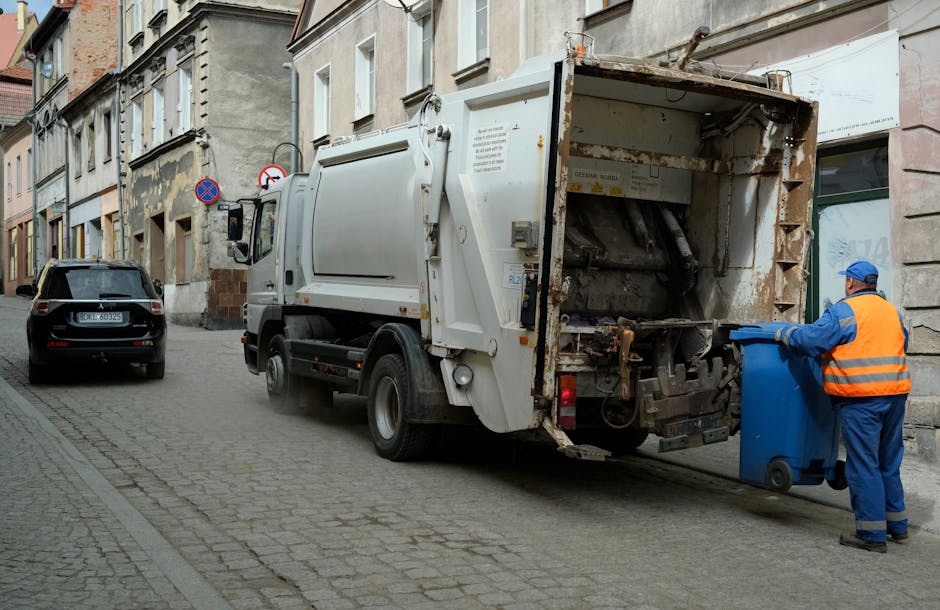
Emergency rubbish removal after DIY jobs in Cricklewood
If you have just finished a DIY project and now your hallway, driveway, or front room looks like a mini builders' yard, you are not alone. Emergency rubbish removal after DIY jobs in Cricklewood is exactly the kind of help people need when the bags pile up faster than expected, a cupboard comes apart in the wrong place, or rubble suddenly turns up where you meant to have a tidy finish. It is the practical fix when the job is done, but the mess is still very much there.
In a place like Cricklewood, where homes, flats, and small commercial spaces all sit fairly close together, leftover DIY waste can become a nuisance quickly. This guide explains what emergency rubbish removal involves, when it makes sense, how it works, and what to watch out for. You will also find a checklist, a comparison of common options, and a realistic example so you can make a calm, sensible decision rather than a rushed one.
Let's face it: the final sweep-up is often the part nobody enjoys. But it can be handled properly.
Table of Contents
- Why Emergency rubbish removal after DIY jobs in Cricklewood Matters
- How Emergency rubbish removal after DIY jobs in Cricklewood Works
- Key Benefits and Practical Advantages
- Who This Is For and When It Makes Sense
- Step-by-Step Guidance
- Expert Tips for Better Results
- Common Mistakes to Avoid
- Tools, Resources and Recommendations
- Law, Compliance, Standards, or Best Practice
- Options, Methods, or Comparison Table
- Case Study or Real-World Example
- Practical Checklist
- Conclusion
- Frequently Asked Questions
Why Emergency rubbish removal after DIY jobs in Cricklewood Matters
DIY projects tend to create waste in bursts. One hour you are stripping wallpaper or replacing a worktop; the next, you are staring at broken plasterboard, timber offcuts, old skirting, packaging, paint tins, and a stack of heavy black bags. It builds up quickly, and once it starts blocking access, it stops being "messy" and becomes a genuine problem.
In Cricklewood, that matters for a few practical reasons. Shared entrances, limited street space, and tight storage areas can make it hard to leave waste sitting around. If you live in a flat or a narrow terrace, a pile of DIY rubbish can get in the way of neighbours, contractors, or even your own ability to keep working. And if the waste includes sharp items, dust, broken tiles, or heavy materials, it can also become a safety issue very fast.
Emergency rubbish removal is not just about speed. It is about restoring order before the situation turns awkward. Maybe you have guests coming. Maybe the builder returns tomorrow. Maybe your own patience is simply gone. Fair enough. The point is to remove the pressure as well as the rubbish.
Expert summary: the best emergency clearance service is the one that removes the mess quickly, handles different DIY waste types safely, and leaves the space usable again without creating another headache.
How Emergency rubbish removal after DIY jobs in Cricklewood Works
The process is usually simpler than people expect. A proper rubbish removal team will normally assess the load, identify the waste types, agree access, and then clear everything in one visit where possible. For urgent jobs, the emphasis is on fast response and practical planning, not fuss.
Here is the usual shape of it:
- You describe the waste. This might include rubble, broken furniture, timber, bathroom fixtures, plasterboard, packaging, or mixed household DIY rubbish.
- You explain access. Stairs, tight hallways, parking limits, and loading points matter a lot in Cricklewood, especially if the property is a flat or a converted house.
- The team estimates the job. Sometimes this is done from photos, sometimes with a short visit. Clear photos help a lot, to be honest.
- The rubbish is removed. Waste is loaded safely, with heavier or awkward items handled first so the job stays controlled.
- Sorting and disposal follow. Reusable or recyclable materials are separated where possible, and the waste is taken away for proper handling.
The "emergency" part usually means the collection is prioritised. It does not always mean every single item is gone in ten minutes. If there is a lot of rubble or a badly mixed load, the team may need extra hands or a larger vehicle. That is normal. The useful thing is that the problem starts shrinking almost immediately.
If the waste came from a larger home project, it may overlap with builders' waste clearance or general waste removal. For garden shed clear-outs or outdoor DIY jobs, garden clearance can also be relevant.
Key Benefits and Practical Advantages
The obvious benefit is speed. But the real value goes beyond that. Emergency rubbish removal after a DIY job gives you breathing room, and sometimes that is worth more than people admit.
- Fast space recovery. You can use the room, garage, or hallway again without waiting days.
- Reduced trip hazards. Loose boards, nails, broken tiles, and bags in a walkway are an accident waiting to happen.
- Less stress. It is much easier to finish a project when the clutter is gone.
- Better presentation. Handy if you are renting, selling, or simply trying to keep the home looking decent.
- Safer handling of awkward waste. Heavy or sharp items are moved by people who deal with them regularly.
- More efficient than making multiple tip runs. Particularly if you do not have the right vehicle or if you are short on time.
There is also a very practical benefit that gets overlooked: momentum. Once the rubbish is out, the rest of the job feels manageable again. Before that, everything feels half-finished and slightly annoying. Afterward, it is just cleaner. Simpler. Easier to live with.
For larger clear-outs that started as a DIY job and somehow turned into a full room reset, you might also find home clearance or house clearance more suitable than a basic one-off collection.
Who This Is For and When It Makes Sense
This kind of service is not only for major renovation jobs. In fact, many of the calls that feel most "urgent" are from fairly ordinary situations that have just got out of hand.
You may need emergency rubbish removal if you are:
- renovating a kitchen or bathroom and cannot keep the waste inside any longer
- clearing out a room before guests, a landlord inspection, or a property handover
- dealing with broken furniture after a DIY dismantling job that went a bit sideways
- living in a flat with little storage and nowhere safe to stack bags
- trying to clear a garage, loft, or shed after a busy weekend project
- working to a tight deadline because other trades are due in next
It also makes sense when the waste is mixed. That is often the tricky bit. A pile of timber offcuts, old fittings, packaging, and debris is not especially pleasant to sort by hand, especially if the weather turns damp and the cardboard starts sagging. Cricklewood weather can do that to you in no time at all.
If the project also involves bulky furniture, the relevant route may be furniture clearance or furniture disposal. For larger domestic turnarounds, flat clearance can be a better fit.
Step-by-Step Guidance
If you want a smoother process, a little preparation goes a long way. You do not need to sort everything perfectly, but a basic structure helps the collection go faster and usually keeps costs more predictable.
- Separate hazards first. Put aside anything sharp, dusty, heavy, or potentially risky, such as broken glass, blades, paint, and loose screws.
- Group similar waste. Keep timber together, rubble together, and reusable items apart if possible.
- Check access. Measure doorways if necessary, and think about where bags or items can be stacked safely without blocking exits.
- Take clear photos. Wide shots plus close-ups usually help the most. One fuzzy picture taken under a lamp at 10 p.m. is not ideal. We have all done it.
- Explain timing needs. If you need same-day help, say so early. If the waste has to be gone before other work starts, mention that too.
- Confirm what is included. Ask whether labour, loading, disposal, and recycling considerations are all covered.
- Prepare the space. Move pets, children, and valuables out of the way. It sounds obvious, but in a busy house it is easy to miss.
If you are dealing with a large pile in a garage or loft, those spaces often benefit from dedicated handling, so it may be worth looking at garage clearance or loft clearance as part of the plan rather than treating everything as one generic load.
Expert Tips for Better Results
Here are a few things that tend to make a real difference, especially when time is tight.
- Do not overfill bags. Too many people try to "just make do" and end up with bags that are too heavy to lift safely.
- Keep liquids separate. Paint, solvents, adhesives, and cleaning chemicals should not be mixed with dry rubble.
- Think about the route out. If you know the waste has to pass through a narrow stairwell, remove fragile items first.
- Be honest about volume. It is better to say "a bit more than expected" than to understate the job and create delays.
- Use photos in daylight. Natural light makes waste type and quantity much easier to judge.
- Ask about recycling expectations. A responsible team should be able to explain how different materials are handled.
A small but useful habit: keep a "project corner" from the start. Just one corner. Put all offcuts, packaging, and empty containers there as you work, instead of spreading them around the room. It is a simple thing, but it can save a lot of cleanup grief later.
For people managing waste from a work premises or side business rather than a home DIY job, business waste removal may be more appropriate than domestic clearance.
Common Mistakes to Avoid
Most issues are avoidable. They are usually caused by rushing, not by anything complicated.
- Leaving the waste too long. Once it starts spreading, the job gets harder and messier.
- Mixing everything together blindly. Hazardous items, rubble, and general waste often need different handling.
- Blocking access routes. That slows the crew down and can create safety problems.
- Assuming a standard household bin can cope. It really cannot, not with DIY debris.
- Forgetting about breakables or sharp edges. Old tiles and broken wood can cut through bags and injure whoever moves them.
- Not checking what happens after collection. People sometimes focus on the pickup, but disposal and recycling matter too.
Another easy mistake is waiting until the project is "basically done" before arranging help. That sounds efficient, but often the result is a larger pile, more clutter, and more pressure. If you know the waste will be substantial, sort out removal early. Future-you will be grateful, trust me.
Tools, Resources and Recommendations
You do not need a huge toolkit to manage DIY waste well, but a few sensible items help.
- heavy-duty rubble sacks or reinforced refuse bags
- gloves with a proper grip
- a dust mask for dusty materials like plasterboard
- tape for bundling timber where safe to do so
- a broom and dustpan for the final sweep
- box cutter or screwdriver for dismantling oversized packaging
- labels or marker pens if you are separating items by type
In many cases, the best "resource" is simply a clear plan. Know what is staying, what is going, and what may need special handling. If you are replacing old fittings or furniture as part of the same job, it can help to browse practical pages like house clearance and home clearance to judge whether your waste is best handled as a room-by-room task or a broader property clearance.
If your main concern is how the service operates, what safety measures are in place, or how waste is handled on site, the site's insurance and safety information and health and safety policy pages are useful places to look. For environmental handling, recycling and sustainability is worth reading as well.
Law, Compliance, Standards, or Best Practice
DIY waste in the UK should be handled carefully, especially when it includes mixed materials, sharp objects, or anything that could be considered hazardous. You do not need to be a legal expert to stay on the right side of things, but you do need to be thoughtful about how rubbish is stored, transported, and handed over.
Good practice usually means:
- keeping waste secure so it does not create a nuisance or a hazard
- separating hazardous items from general rubbish where practical
- using responsible disposal routes rather than fly-tipping or leaving waste on the street
- checking that the provider gives clear, sensible information about handling and disposal
- making sure access arrangements do not put people at risk during collection
In London, where properties can be close together and access can be tight, this matters even more. A cluttered pavement, an overloaded hallway, or a pile of loose sharp waste is nobody's idea of a good afternoon. Responsible handling is part of the service, not an optional extra.
If you are comparing providers, it is reasonable to ask how they manage sorting, loading, safety on site, and disposal routes. You do not need a lecture. Just a straight answer.
Options, Methods, or Comparison Table
There are several ways to deal with emergency DIY rubbish. The right one depends on volume, urgency, and the type of waste involved.
| Option | Best for | Pros | Limitations |
|---|---|---|---|
| Self-loading to a disposal point | Very small amounts of clean waste | Can be cheap if you already have transport | Time-consuming, physically demanding, awkward for rubble or mixed waste |
| Skip hire | Longer projects with predictable waste volume | Useful for ongoing renovations | Needs space, can be less flexible, waste still needs sorting |
| Emergency rubbish removal service | Urgent, mixed, or bulky DIY waste | Fast, convenient, less manual effort, often same-day | May cost more than doing it yourself, especially for very small jobs |
For many Cricklewood households, the emergency collection option is the most practical when time is tight and the waste is messy or mixed. A skip can be fine for a longer renovation, but if the job has already finished and the clutter needs to vanish quickly, there is something refreshingly simple about letting a team handle it in one go.
Case Study or Real-World Example
A realistic example: a couple in a Cricklewood flat decide to update their bathroom over a weekend. What starts as a tidy plan turns into broken tiles, cardboard packaging, a dismantled vanity unit, a few bags of plaster dust, and a heavy old mirror they had not counted on. By Sunday evening, the waste is stacked in the entrance hall and one of the boxes is starting to collapse.
The problem is not just appearance. The hallway is narrow, the building has shared access, and the pile is in the way of everyone. They do not want to keep stepping around rubble every time the kettle goes on. So they arrange emergency rubbish removal, send photos, and explain that the job needs doing before the tiler arrives the next day.
The collection is straightforward because the waste was grouped first. The heavier debris goes out early, the mixed bags are loaded carefully, and the hallway is cleared much faster than they expected. By Monday morning the flat is usable again, and the next contractor can get straight to work.
Nothing dramatic, really. Just one of those cases where fast action prevents a small mess from becoming a weekend-long headache.
Practical Checklist
Use this checklist if you are getting ready to book emergency rubbish removal after a DIY job in Cricklewood.
- Identify the waste types: rubble, timber, packaging, furniture, fittings, or mixed debris
- Remove sharp or hazardous items from general waste where possible
- Clear a safe route to the waste
- Take clear photos in good light
- Estimate how urgently the rubbish needs to go
- Check whether access includes stairs, narrow passages, or limited parking
- Group similar waste together
- Keep children and pets away from the work area
- Confirm what the collection will cover
- Ask about recycling and responsible disposal
- Choose a time slot that avoids clashes with other trades
- Leave room for the team to work safely
If the DIY job expanded into a broader declutter, it may be worth exploring garage clearance, loft clearance, or even furniture clearance alongside the main waste removal. That can make the whole job cleaner and more efficient.
Conclusion
Emergency rubbish removal after DIY jobs in Cricklewood is about more than getting rid of a pile of waste. It is about making the space usable again, reducing risk, and helping a project end properly instead of dragging on for another day or two. Whether you have plaster dust in the corner, broken furniture in the hallway, or a growing stack of mixed renovation debris, the right clearance approach can save time, stress, and a fair bit of lifting.
The best results usually come from a simple mix of honesty, preparation, and quick action. Be clear about what needs removing, show the access, and choose a provider that handles waste carefully rather than just quickly. That balance matters.
Get a free quote today and see how much you can save.
And once the last bag is gone and the room is quiet again, that small bit of relief really does matter.
Frequently Asked Questions
What counts as emergency rubbish removal after a DIY job?
It usually means fast-response collection of waste created by home improvement work, such as rubble, timber, broken fixtures, packaging, and general renovation debris. If the rubbish is blocking access, causing a safety concern, or simply needs to be gone quickly, it fits the emergency brief.
Can emergency rubbish removal handle mixed DIY waste?
Yes, in many cases. Mixed waste is very common after DIY work. The key is to describe it clearly so the collection team knows whether there are heavy, sharp, dusty, or awkward items involved.
Is same-day collection possible in Cricklewood?
Often, yes, depending on availability, access, and the size of the load. It is best to request the job as early as possible and send clear photos so the provider can judge what is needed.
What DIY rubbish is the hardest to remove?
Heavy rubble, broken tiles, plasterboard, and mixed loads with awkward furniture parts can be more difficult than simple bagged waste. Anything sharp, dusty, or bulky tends to slow things down a little.
Do I need to sort the waste before collection?
Not perfectly, but some basic grouping helps. Keeping rubble separate from timber or general household waste usually makes the job faster and easier to manage. If you can do a bit of sorting, it is worth it.
What should I do with paint tins and chemicals?
Keep them separate from ordinary rubbish and mention them when you book. Some materials need special handling, so it is better not to mix them into standard DIY bags.
How do I prepare a flat for emergency waste removal?
Clear access routes, move valuables, secure pets, and make sure the waste is easy to reach. In flats, stair access and shared hallways matter a lot, so a bit of preparation saves time.
Is emergency rubbish removal better than skip hire?
It depends. Skip hire can suit ongoing renovation work, but emergency rubbish removal is usually better when the waste needs to disappear quickly and you do not want the hassle of loading or storing a skip.
Can I use this service after a small DIY project?
Absolutely. You do not need to be doing a full house renovation. Even a modest project can create more waste than expected, especially if old furniture, packaging, and broken fittings are involved.
What happens to the waste after it is collected?
Responsible providers sort and dispose of it in line with normal waste-handling practice, with recyclable materials separated where practical. It is sensible to ask about this so you know how the waste will be managed.
How much notice do I need to give?
For urgent jobs, the more notice the better, but many collections are arranged quickly if the load and access are clear. If you have a deadline, say so straight away.
What if I have rubbish from both DIY and furniture disposal?
That is very common, and it can often be handled together. Furniture and household items may be suitable for furniture disposal, while the rest of the waste can be cleared as part of the broader job.
Can a provider help with larger property clear-outs too?
Yes. If the DIY job is part of a bigger reset, services like home clearance or house clearance may be more suitable than a simple one-off rubbish pickup.
What is the most common mistake people make?
Leaving the waste too long and letting it spread. It sounds harmless at first, then suddenly the whole place feels cluttered. Getting it removed early makes everything easier.