
Health and Safety Policy for Office Clearance Cricklewood
This Health and Safety Policy sets out the principles, responsibilities and procedures for safe operations during office clearance and commercial rubbish removal activities. The policy covers all aspects of office clearance, including site assessment, manual handling, waste segregation and transfer to authorised facilities. It is designed for use by staff, contractors and supervisors working within the rubbish removal and waste clearance service area and should be read alongside operational procedures. The primary aim is to protect people, property and the environment while maintaining efficient clearance and rubbish collection operations.
Scope and Application
This policy applies to all employees, temporary staff and sub-contractors carrying out office clearances, waste disposal and site removal operations. It covers Cricklewood office clearance activities as well as general commercial waste removal tasks within the wider service area. All personnel engaged in removal of office furniture, electronic equipment, paper stores and non-hazardous rubbish must follow the standards set out here. The policy is not a guide to legal obligations, but reflects best practice for operational safety and environmental care.Responsibilities
Managers are responsible for ensuring risk assessments are completed, that training is provided and that resources for safe rubbish removal operations are available. Supervisors must monitor day-to-day compliance, allocate tasks according to competency and ensure that safe systems are followed. Employees and contractors have a duty to work safely, report hazards and use the correct equipment. Key responsibilities include:
- Carrying out site risk assessments before work begins
- Using appropriate personal protective equipment (PPE) for the task
- Adhering to safe manual handling techniques and mechanical aids where necessary

Risk Assessment and Control Measures
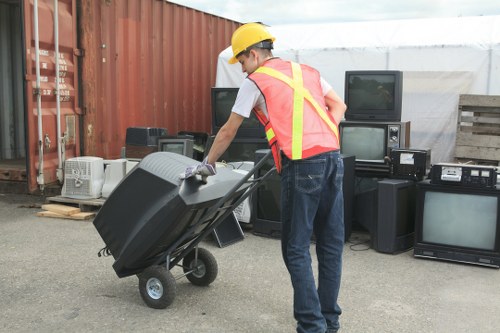
Before any office clearance, a documented risk assessment must be conducted to identify physical hazards, asbestos risks in older fittings, sharp objects and potential hazardous waste. Control measures will include task planning, segregation of waste streams, safe routes for carrying items, and ensuring waste is placed in suitable containers. When dealing with bulky fixtures, the use of trolleys, sack trucks and lifting equipment is mandatory. Supervisors will ensure a clear exclusion zone is established where necessary and that emergency access remains unobstructed.
Personal Protective Equipment and Training
The rubbish collection team must wear appropriate PPE for the nature of the clearance: high-visibility clothing, gloves, protective footwear and eye protection where there is a risk of debris. Staff will be trained in manual handling, safe use of lifting aids and vehicle loading to reduce musculoskeletal injury. Training programmes will be proportionate to roles and refreshed periodically. Strong emphasis is placed on correct footwear, correct handling of sharp or broken items and awareness of biological or chemical contamination risks.
Manual Handling and Vehicle Safety
Manual handling assessments will be used to determine when mechanical assistance or additional personnel are required. Vehicles used for rubbish collection and clearance must be roadworthy and loaded to prevent shifting or spillage. Drivers and loaders must follow safe vehicle procedures including securing loads, checking straps and ensuring that tail lifts and ramps are operated safely. Routine vehicle checks and maintenance records are required to be kept by operations management.
Hazardous Materials and Waste Segregation
Not all waste is non-hazardous. Electrical items, batteries, fluorescent tubes, solvents and toner cartridges must be identified and segregated for specialist disposal. If hazardous items are discovered during an office clearance, work will stop and the item will be isolated pending expert handling. A clear waste segregation protocol must be followed to minimise contamination and to ensure compliance with waste transfer requirements. Clear labelling and separation of recyclable materials supports environmental outcomes and reduces risk to handlers.

Contractors, Visitors and Site Control
All subcontractors engaged in clearance work are required to adhere to this policy and provide evidence of competency and insurance. Visitors and building users should be kept away from active clearance zones. Site control includes signage, barriers and supervision by trained personnel. Any deviations from safe practice must be recorded and addressed promptly to prevent recurrence. Regular communication and pre-start briefings will be used to reinforce roles and expectations.
Monitoring, Incident Reporting and Review
Performance against this policy will be monitored through routine inspections, incident reports and audits. All accidents, near-misses and unsafe conditions must be reported and investigated to identify root causes and corrective actions. Records of training, risk assessments, equipment checks and incident investigations will be maintained. The policy will be reviewed periodically to reflect changes in operational practice, equipment and lessons learned. The objective is continual improvement in safety for office clearance and rubbish removal operations across the service area.
Conclusion: Commitment to these standards promotes a safer workplace during removals, reduces environmental impact and protects everyone involved in the waste clearance and rubbish company service area. Compliance with the measures described here is a condition of employment and engagement for all personnel involved in clearance activities.
